Program Highlights
- Join a cohort of Latine/Hispanic graduate students from across the country
- Learn about the intersection of Latine/Hispanic Studies and Theology
- Experience a learning environment centering Latine/Hispanic ways of knowing
- Earn three credits toward your degree
- Explore questions of vocation and further education
Program Description
The Summer Session is a two-week in-person intensive that takes place each June at a different Sponsoring School institution. Students gather from across the world to take courses offered by leading scholars in Latine/Hispanic studies and theological education. Additionally, students partake in various organized activities that generate a robust community network during and after the program. This program overlaps with Through Hispanic Eyes and HSP for Undergrads, connecting participants with institutional leaders and undergraduate students.
Program Dates and Location
- Dates: June 12 – 26, 2027
- Location: Details forthcoming
Program Fees
- $475 for Master students from HSP Sponsoring Schools
- $800 for Master and Doctoral students from Non-HSP Sponsoring Schools
- The program fee includes the cost of room, board, travel and the three graduate credits
Please note that Doctoral students are responsible for their own travel costs.
Program Eligibility
- This program is open to graduate students at an accredited institution
- Priority is given to students from HSP Sponsoring Schools
Program Application
- The application for this program will open on November 1, 2026
- The required recommendations are due 1-week after the application closes
Required Recommendations
- The application for this program requires two total recommendations: one recommendation must be from a Dean and one recommendation must be from a faculty member at your institution
- Applicants will automatically receive an email notification when a recommendation has been submitted
- An application without a recommendation will be considered incomplete and thus ineligible for consideration
When Will I Receive My Admission Decision?
- Applicants will typically receive an email notification regarding the status of their application within two weeks of the application closing
Once an applicant has been accepted into the program they will receive an email with a matriculation form to accept their program admission. This matriculation form includes the process for paying the Program Fee and is due 2 weeks after the notification of admission.
The HSP accepts the following payment methods for the Program Fee after an individual has been accepted into the program:
- Check: Please make checks payable to the Hispanic Scholars Program and mail to: Hispanic Scholars Program (42 Tiemann Place, Ste 310 New York, NY 10027)
- PayPal: Payments may be submitted via PayPal using an existing account or by creating one and linking your credit card
- Zelle: Zelle payments may be made to admin@hispanicscholarsprogram.org
Please contact the HSP administrator, Elizabeth Niang (eniang@hispanicscholarsprogram.org), if you have any questions regarding payment options.
- Travel: After you have been officially accepted to the program, submitted your matriculation form, and submitted the program fee, you may proceed with purchasing your travel to the program location. Upon purchasing your travel, you must submit your full travel itinerary via email to the HSP administrator, Elizabeth Niang (eniang@hispanicscholarsprogram.org).
- Housing: All housing for the duration of the program is coordinated directly by the HSP. We recognize that travel schedules may require some participants to arrive prior to the program start date or depart after the program concludes. If you require housing outside of the official program dates, we will work with you to coordinate accommodations. Please note that the cost of any additional housing will be deducted from your travel reimbursement.
Since its first Summer Session in 1989, the Hispanic Scholars Program (HSP) has sought to be a place of welcome in which theological education is made available to all students. In keeping with this commitment, the HSP does not discriminate in its admissions or program practices on the basis of race, ethnicity, national origin, gender, disability, or any other status protected by law. Applicants are evaluated using program-related criteria such as academic preparation, vocational interest, character, and commitment to theological study. The HSP has always served students, faculty, staff, administrators, and leaders from a wide range of backgrounds. Guided by the values of en conjunto (working together as a community), lo cotidiano (attending to the realities of daily life), and acompañamiento (walking alongside one another), we affirm that all people are created in the image of God and journey together in learning and faith.
We guarantee that our courses are taught with excellence, our faculty hold terminal degrees and are in good standing in their field, and that all of our classes meet ATS accreditation standards. Please note that HSP courses are not intended to fulfill any one school’s academic requirement, as we offer a wide variety of courses during the J-Term, Summer Session, HSP for Undergrads, Doctoral Accompaniment Seminar, and Praxis of Accompaniment. If a school chooses to use one of our courses to fulfill their requirements, then that is within the school’s purview, but we see our courses as electives that add to and expand a student’s curriculum.
In accordance with ATS accreditation standards, students must attend all class sessions in order to receive credit for the Summer Session.
- Will the credits I earn be accepted for transfer by my institution? All of our classes meet ATS accreditation standards and are accepted by HSP Sponsoring Schools.
- Will the credits I earn fulfill my degree requirements? It is at your school’s discretion so connect with your registrar.
- Can I miss one of the class sessions and still receive credit? No, students must attend all class sessions to receive credit for the class in compliance with ATS accreditation standards.
- Can I audit the class? No, our policies do not allow individuals to audit.
- Do class sessions occur during the weekend? No, class sessions occur only during the weekdays.
- Can individuals who have already graduated or are not currently enrolled as students apply? No, this program is open only to enrolled students.
- What language are classes facilitated in? Our classes are all facilitated in English. The only exceptions are always identified as bilingual.
- When do students gain access to the class materials? Students gain access to class materials after the matriculation form has been submitted and typically a month before the class begins.
- I am on academic probation at my institution, can I still apply? No, we do not admit students on academic probation.
2027 Summer Session Courses

Theological Repentance: Unsettling Social Supremacies in Our Theologies
Course Area: Theology
Faculty: Dr. Xochitl Alvizo, Ph.D., California State University, Northridge
Course Description: This course engages feminist, queer, and decolonial theologies as borderlands that challenge social regimes of the “normal.” Students will be introduced to decolonial feminist and queer theories as analytical tools for examining how gender, race, sexuality, and religion intersect to create theological borderlands—marginal spaces that call for non-normative, even “indecent” (Marcella Althaus-Reid), emancipatory possibilities. Grounded in this emancipatory approach to Christian theological inquiry and practice, the course focuses on the sociopolitical and economic consequences of these intersections for marginalized Latine populations and invites students to evaluate theological frameworks and practices for the ways they may reproduce, reinforce, or challenge the social supremacies embedded within them.
Biography: Xochitl Alvizo is a queer feminist theologian. She teaches in the area of Women and Religion and the Philosophy of Sex, Gender, and Sexuality at California State University, Northridge. She brings an intercultural feminist approach to theology and the study of religion. Her research is focused on feminist and queer theologies, congregational studies, ecclesiology, and the emerging church. She is co-founder of Feminism and Religion (feminismandreligion.com) along with Gina Messina. Her work is inspired by the conviction that all people are inextricably connected, and the good one can do in any one area inevitably and positively impacts all others. She lives in Los Angeles, CA where she was also born and raised.
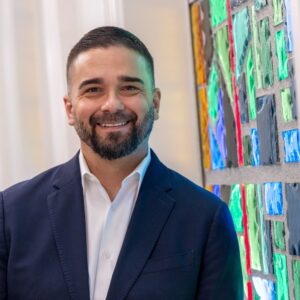
Latinx Freedom: Power and Protest in the 1960s and 1970s
Course Area: History
Faculty: Dr. Felipe Hinojosa, Ph.D., Baylor University
Course Description: This course will examine the history of the Latinx Freedom Movement of the 1960s and 1970s. We will explore the major ideas, movements, and events in Latinx movement history, beginning with movements of the late nineteenth and early twentieth century. In doing so, we will interrogate how Latinx communities forged community, organized for civil rights, created spaces of freedom, and claimed citizenship across time and space. The course will explore how Latinx freedom movements (from California to Illinois to Texas to New York) made their claims for dignity along the lines of race, gender, sexuality, religion, class, and pop culture. This course will take a relational approach to Latinx history to investigate how Latinx communities built multiethnic and multiracial coalitions, the tensions and possibilities of those coalitions, and the visions of freedom that emerged out of deep solidarities.
Biography: Felipe Hinojosa was born and raised in a town called Brownsville, located at the southern end of the Texas-Mexico border. He is the John and Nancy Jackson Endowed Chair in Latin America & Professor of History at Baylor University. His research areas include Latinx studies, the Civil Rights movement, and Religion. He is the author of two award winning books: Latino Mennonites: Civil Rights, Faith, and Evangelical Culture (Johns Hopkins University Press, 2014); and Apostles of Change: Latino Radical Politics, Church Occupations, and the Fight to Save the Barrio (University of Texas Press, 2021). He has published two co-edited books: Faith and Power: Latino Religious Politics Since 1945 (New York University Press, 2022) and Culinary Mestizaje: Racial Mixing and Foodways across the United States (University of Texas Press, 2025). Hinojosa is currently working on a book on the Latino civil rights movement and its role in shaping American democracy in the post-World War II era.

Whose Bible? Scripture, Authority, and Latine Communities
Course Area: Biblical Studies
Faculty: Dr. Victoria Pérez, Ph.D., University of Southern California
Course Description: Who gets to interpret the Bible, and whose interpretations count as authoritative? This course examines the relationship between Scripture, interpretation, power, and community through the experiences of Latine religious communities. Students will explore how race, class, gender, migration, colonialism, ecclesial authority, and academic training shape biblical interpretation. Particular attention will be given to the knowledge produced within churches, families, (im)migrant communities, and other spaces often excluded from academic biblical scholarship.
Biography: Dr. Victoria Pérez earned her Ph.D. in Religion from the University of Southern California and a Master of Theological Studies from Duke Divinity School. Her research focuses on Pauline literature, reception history, memory, gender, and identity in early Christianity, alongside broader interests in ancient Greco-Roman culture and Latine biblical interpretation. As a scholar and educator, she is especially interested in the ways communities inherit, remember, and reinterpret Scripture and in bringing biblical scholarship into conversation with the lived experiences and interpretive traditions of Latine communities.
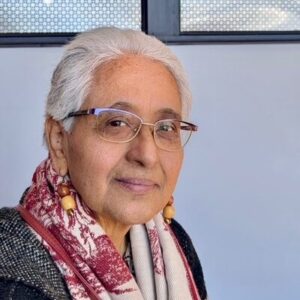
Contextual Theology: Latinx Religious Expressions
Course Area: Practical Theology
Faculty: Rev. Dr. Cristian De La Rosa, Ph.D., Boston University School of Theology
Course Description: This course will consider the role of religion in Hispanic/Latinx cultures through the exploration of popular beliefs, cultural/religious symbols, and experiences of the Sacred. It will discuss contributions from the fields of history, anthropology, sociology, literature, and art that assist in understanding faith practices and symbolic resource in the struggles of marginalized Hispanic/Latinx communities. Attention will be given to the experience of Mexican and Mexican American communities where Our Lady of Guadalupe can be considered, through most fields of study, as a powerful symbolic resource across geographical and chronological fronteras. This is an interdisciplinary course facilitated through a protestant feminist/ Mujerista perspective. It will be run in a seminar style with the instructor as a facilitator for critical engagement of readings, sharing experiences, and contextual deconstruction/construction of methods, theories, and “official” historical understandings and practices.
Biography: Rev. Dr. Cristian De La Rosa received her PhD in Theology and Ethics from Chicago Theological Seminary where her dissertation focused on contextual dynamics of power and agency. Her areas of interest and scholarship include Mujerista Theology, cultural theory, Latin American Liberation Theology, and the Hispanic/Latino community and its religious history. She is invested in social justice making, religious leadership formation, and bridge building between the academy, the church and diverse communities.
The Rev. Dr. Cristian De La Rosa serves as Assistant Professor of Contextual Theology and Practice at Boston University School of Theology and as Director for the Raices Latinas Program on Theology, Leadership, and Research. She is a clergy member of the New England Annual Conference of the United Methodist Church.
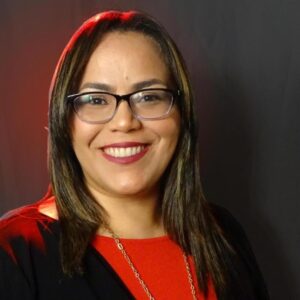
Liturgical Performance, Music, and Identity in Latine Communities
Course Area: Liturgy
Faculty: Rev. Dr. Julissa Ossorio Bermúdez, Ph.D., Inter American University of Puerto Rico
Course Description: A course designed for those who want to examine deeply how Latine and Caribbean communities perform their faith as they negotiate, construct, and embody their identities. Moving beyond music as a technical, notation-based discipline, the course approaches worship through the lens of “musicking,” understanding congregational song as a physical, relational, and deeply theological act of the whole body. Students will explore how liturgical practices, bodily movements, and sacramental actions—such as baptism and the Eucharist—intersect with congregational song to construct, reflect, negotiate, and challenge national, gender, and religious identities within realities shaped by colonialism and coloniality. Rooted in a decolonial perspective and liberation theology, the course will equip students to critically engage worship practices and curate liturgies that foster congregational encounters with the God of all hope.
Biography: Rev. Dr. Julissa Ossorio Bermúdez is an ordained minister of the Christian Church (Disciples of Christ) in Puerto Rico and serves as Assistant Pastor for Worship at the Christian Church (Disciples of Christ) in University Gardens. An educator since 2003, she has taught from preschool through doctoral levels and currently serves as Institutional Director of PK–12 Educational Services at Inter American University of Puerto Rico. She holds degrees in Music Education, Ethnomusicology, Divinity, and Educational Management and Leadership, including a Ph.D. from Queen’s University Belfast focused on the relationship between music and religion. A singer and pianist, Dr. Ossorio Bermúdez brings together her experience in music, worship, education, and ministry, with particular interests in liturgy, practical theology, and the role of music in congregational life.
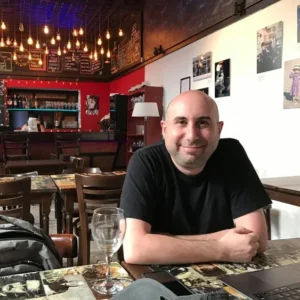
Decolonize Now?! Religion, Latinx Imaginaries, and Global Justice / Decolonizar Ya?! Religión, Imaginarios Latinxs, y Justicia Global
Course Area: Religious Studies
Faculty: Dr. Santiago Slabodsky, Ph.D., Hofstra University
Course Description (bilingual course/curso bilingüe):
- English: Decolonize Now! The phrase has spread across an extraordinary range of media: it appears on protest banners, circulates through memes, is inscribed as urban graffiti, and features prominently in academic scholarship. The cry has become so common that it is now inescapable. And yet, what does it actually mean to decolonize? Is it a global intellectual framework, a transnational grassroots cry, or just another piece of academic jargon? And where do religion and religious traditions fit into this call? This course is a journey through the many meanings to “decolonize” and the religious thought and practices that have shaped, and been shaped by, that call. Through texts, films, social media, and other resources, we will trace the ideas; the beginnings in Latin American and Latin@ imaginaries, follow the transnational conversations that nourished them, and track the creative readings and misreadings that sent them traveling along unexpected routes of dispersion globally. We live in a messy world, crossed by injustice, where many of us are just trying, ever so simply, to radically change the globe. This course explores the possibilities, alternatives, and tensions of what it might take to build, in the words of the Zapatista movement, “a world where many worlds can fit.”
- Spanish: ¡Decolonizar Ya! La frase se ha extendido por una gama extraordinaria de medios: aparece en pancartas de protesta, circula a través de memes, se inscribe como grafiti urbano y figura de manera prominente en la producción académica. El grito se ha vuelto tan común que ahora resulta ineludible. Y, sin embargo, ¿qué significa realmente decolonizar? ¿Es un marco intelectual global, un clamor popular transnacional, o simplemente otra pieza más de jerga académica? ¿Y que papel toman la religión y las tradiciones religiosas en este llamado? Este curso es un recorrido por los múltiples significados de “decolonizar.” Exploraremos el pensamiento y las prácticas religiosas que han dado forma a ese llamado, y que a la vez han sido moldeados por él. A través de textos, películas, redes sociales y otros recursos, rastrearemos los puntos de iniciación de estas ideas en los imaginarios latinoamericanos y latin@s, seguiremos las conversaciones transnacionales que las nutrieron, y examinaremos las lecturas y creatividad de las “mal” lecturas que las llevaron a viajar por rutas inesperadas de dispersión a nivel global. Vivimos en un mundo caótico, atravesado por la injusticia, donde muchos de nosotros simplemente intentamos, de la manera más sencilla, cambiar radicalmente el mundo. Este curso explora las posibilidades, alternativas y tensiones de lo que podría implicar construir, en palabras del movimiento zapatista, “un mundo donde quepan muchos mundos”.
Biography: Santiago Slabodsky is a South American sociologist of knowledge. He previously served as assistant professor of Global Ethics at Claremont School of Theology in Southern California and is currently professor of Religion and holder of the Kaufman Endowed Chair in Jewish Studies at Hofstra University in New York, where he was the inaugural associate director of the Center for the Study of Race, Culture and Social Justice. His book Decolonial Judaism received the Frantz Fanon Outstanding Book Award from the Caribbean Philosophical Association. Alongside his US positions, he has held visiting positions in Costa Rica, South Africa, Spain, the Netherlands, Turkey, Argentina, Canada, North Macedonia, and Germany. He currently serves as co-editor of the journal Decolonial Horizons in Latin America, associate editor of Re-Orient: The Journal of Critical Muslim Studies in the UK, co-chair of the Religions, Social Conflict, and Peace Unit at the AAR, and co-editor of the book series Transmodern Times: Southern Lenses, Racial/Religious Interrogations and Geopolitical Contestations for Rutgers University Press.
